Disc Mayhem
Cartoon 3D disc golf with real flick throws, a procedural 18-hole course, and 8-player online rounds.
What it is
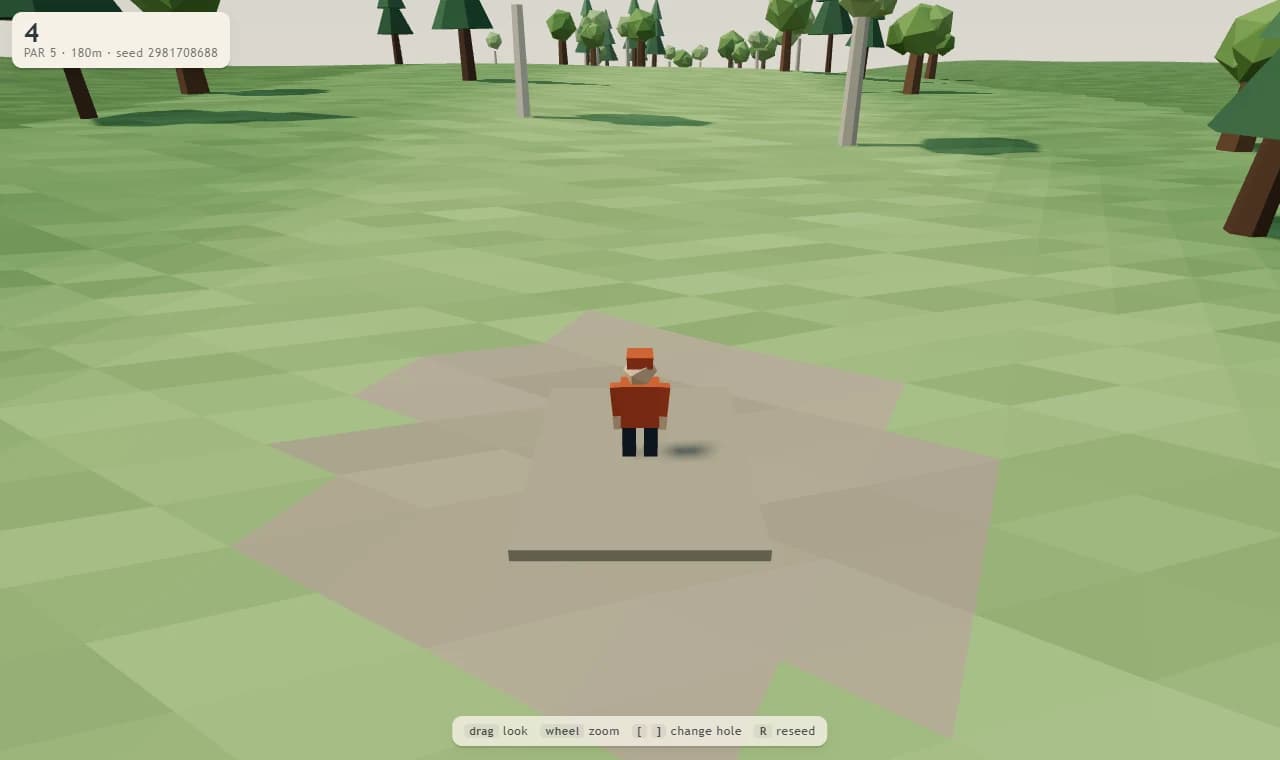
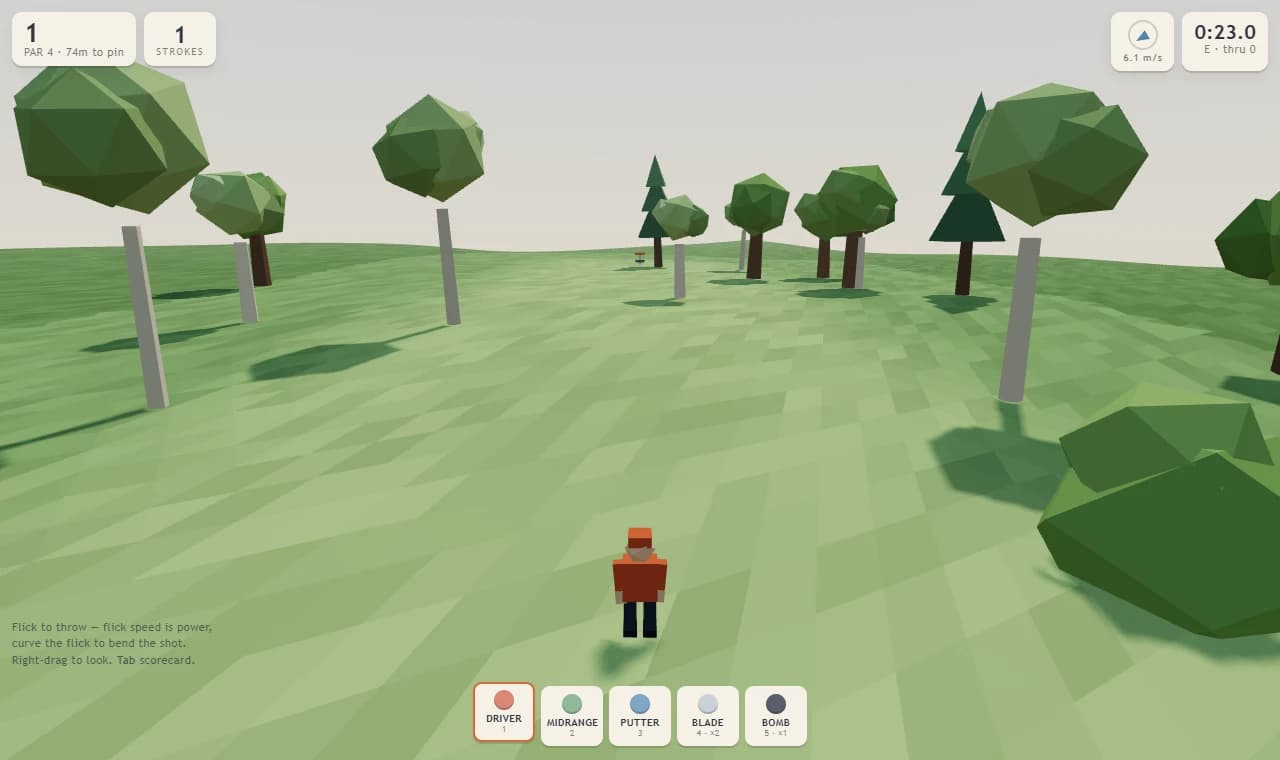
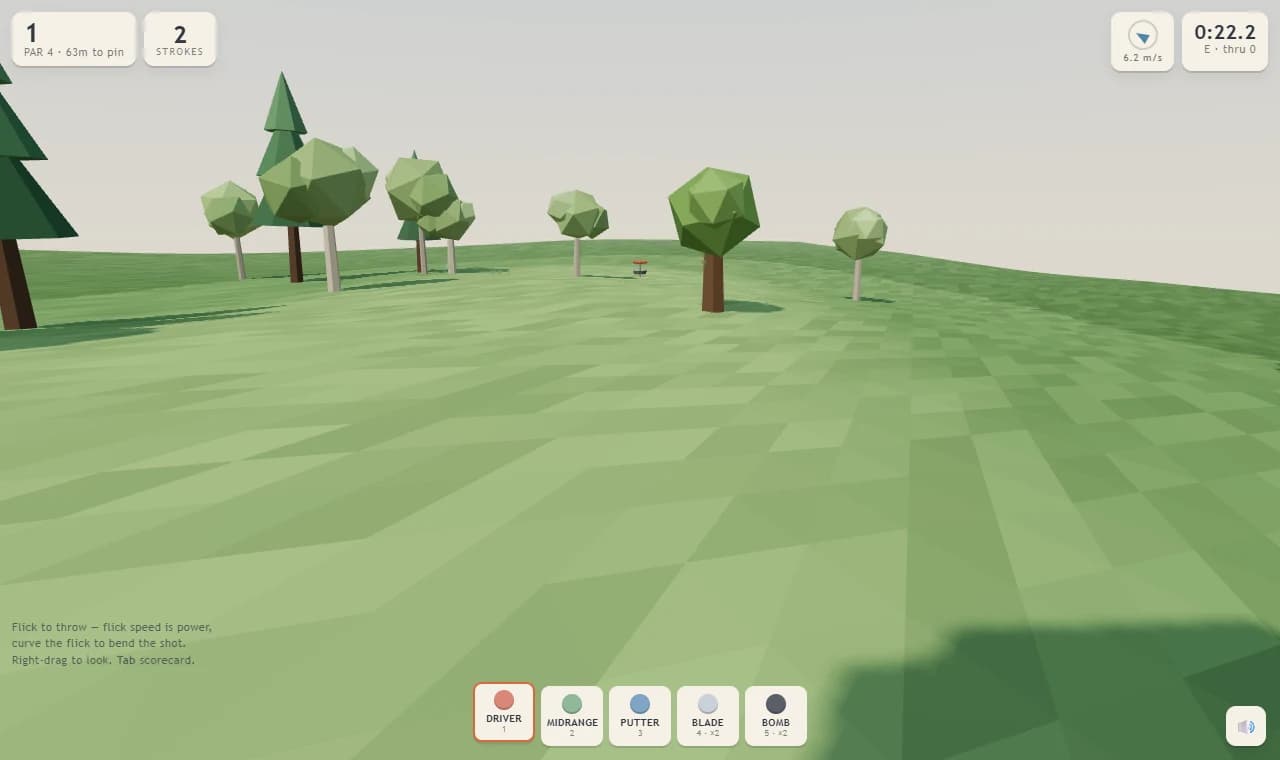
Disc Mayhem is a browser game: hold the mouse, flick, and the disc flies. Flick speed is power, and a curved flick bends the shot — hyzer or anhyzer — the way a real disc does. Every hole of the 18-hole course is generated from a seed, so a daily seed means everyone plays the same course that day. Rounds are simultaneous race golf: lowest strokes wins, and ties go to the clock.
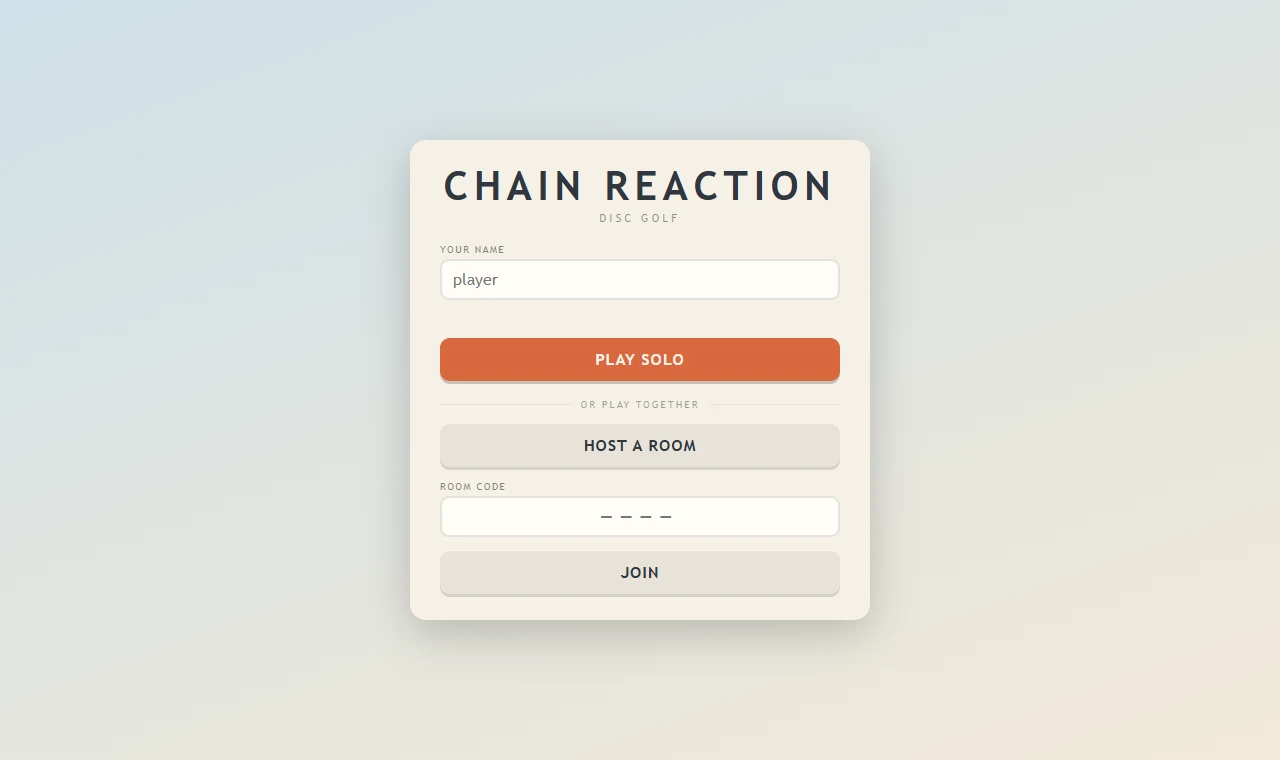
Power discs keep it from being a simulator. A Blade flies flat and fast and “poofs” any opponent it hits — they respawn at their lie with a penalty stroke. A Bomb flattens nearby trees for twelve seconds to open new sightlines. Up to eight players share a room with a four-letter code; it also runs as a desktop app through Electron, and on a phone with one-finger flicks and pinch zoom.
How it's built
- Plain ES modules with an import map — no bundler, no TypeScript, no asset files. Every tree, character, disc and particle is procedural geometry with toon materials.
- Disc flight uses real disc-golf flight numbers (speed, glide, turn, fade) per disc type; wind is rolled per hole; water and trees are collision checks against the generated course.
- shared/ holds the seeded RNG, constants and wire protocol with zero imports, so the same files load in the browser and in Node. The server is a static file server plus WebSocket rooms that relay validated messages.
- The game loop, HUD, scorecard, lobby and menus are vanilla DOM; the Electron wrapper is the path to a Steam build.
Highlights
- Flick-to-throw maps a 2D mouse gesture to a 3D launch vector with spin, tuned until a hyzer flick fades the way a real driver does.
- Deterministic course generation from a 32-bit seed: the daily course is reproduced on every client without sending geometry over the wire.
- Networked rounds with host authority — the relay validates message shapes and room state, so a misbehaving client can't corrupt a round.
- Touch controls were added without forking the input code: one gesture model serves mouse and finger.
- 51 commits, physics first, then course generation, netcode and polish — each module's contract was written in DESIGN.md before its code.
What I'd do next
- Host the relay on a small VPS so public lobbies work anywhere.
- Package with electron-builder and integrate Steamworks for achievements.
- Practice bots exist; teach them to use power discs.
More screens